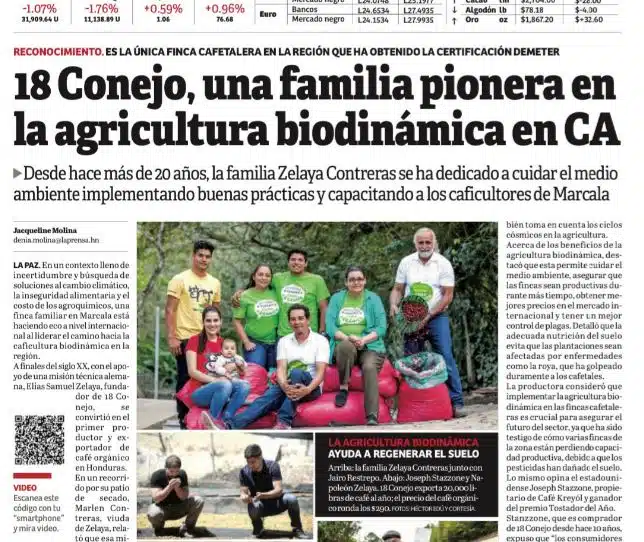
March 10, 2023: The 18 Rabbit Microlots are featured in La Prensa, and recognized as pioneers of Biodynamic and Organic specialty coffee production in Honduras.
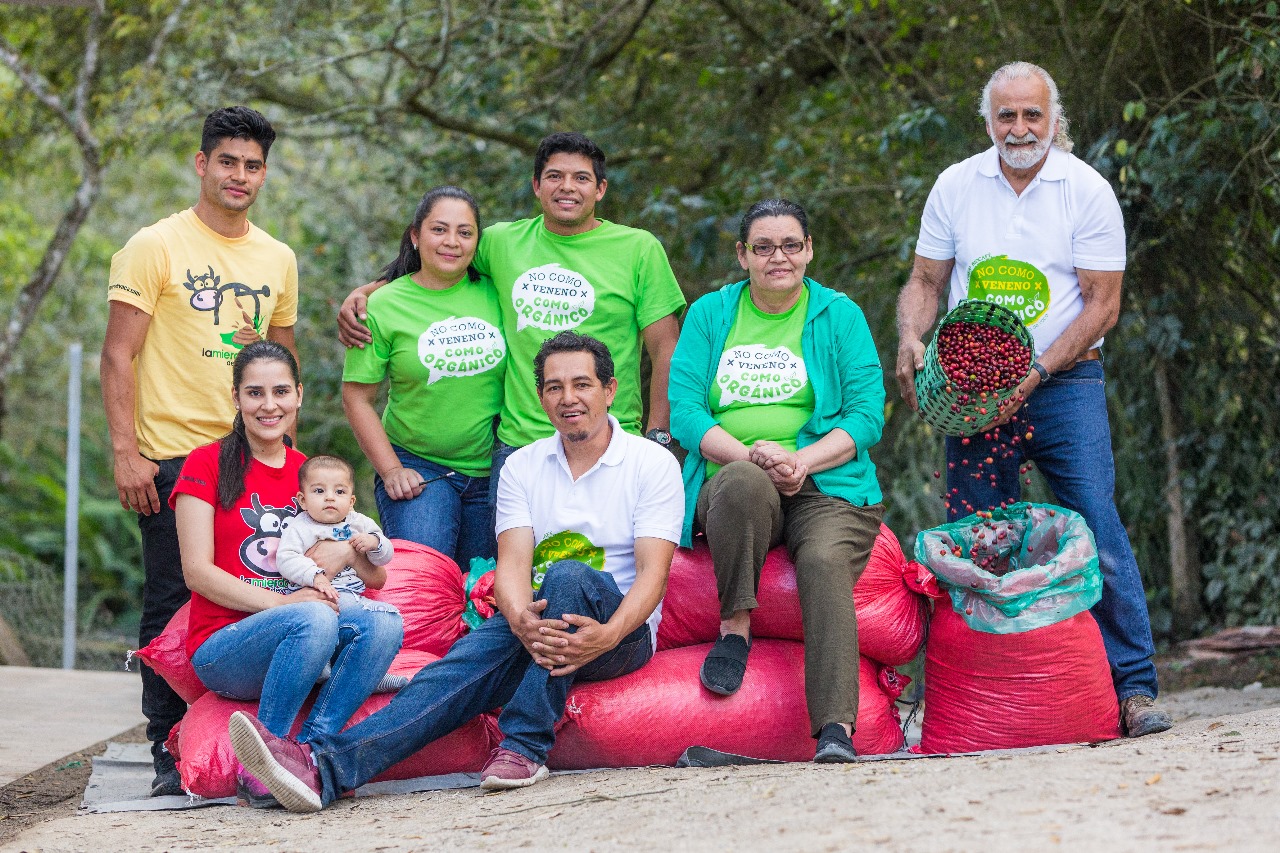
For more than 20 years, the Zelaya Contreras family has been dedicated to caring for the environment by implementing good practices and training Marcala coffee growers.
In a context full of uncertainty and the search for solutions to climate change, food insecurity and the cost of agrochemicals, a family farm in Marcala, Honduras is making an international impact by leading the way towards Biodynamic coffee farming in the region.
At the end of the 20th century, with the support of a German technical mission, Elias Samuel Zelya, founder of 18 rabbit, became the first producer and exporter of organic coffee in Honduras.
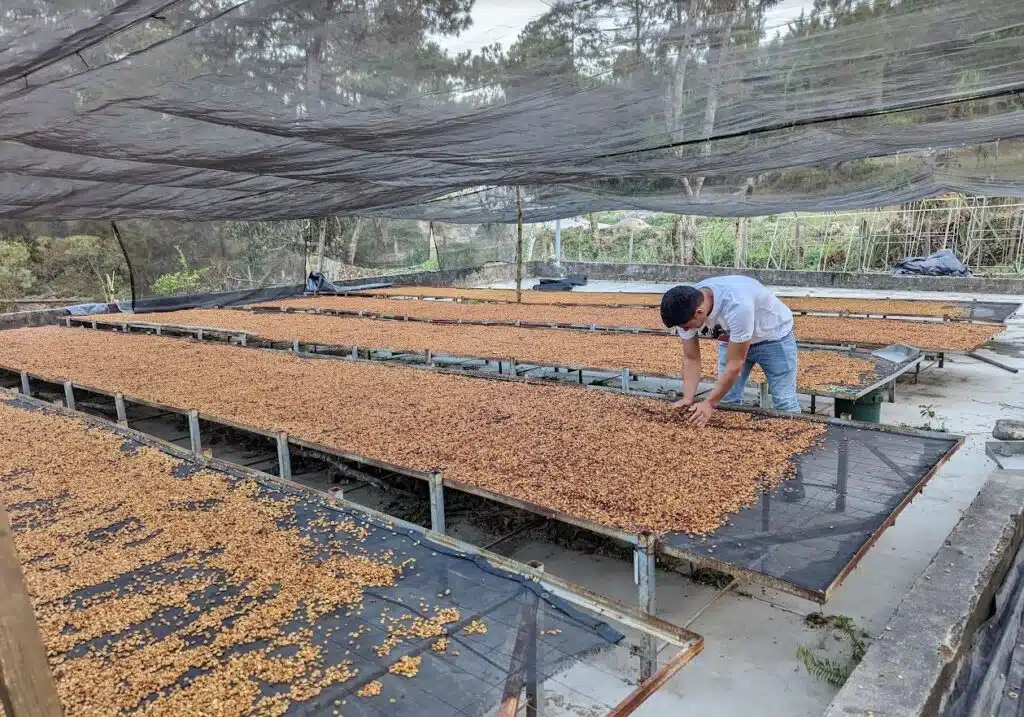
During a tour of the drying yard, Marlen Contreras, Zelya’s widow, said that the technical mission also trained a group of women from the area.
This is how she began to venture into organic farming and when her husband died, she took over management of the company together with her children Napoleon, Luz, and Flor.
For more than 20 years, the Zelya Contreras family has worked to protect the environment, and train and share their knowledge with farmers in the area.
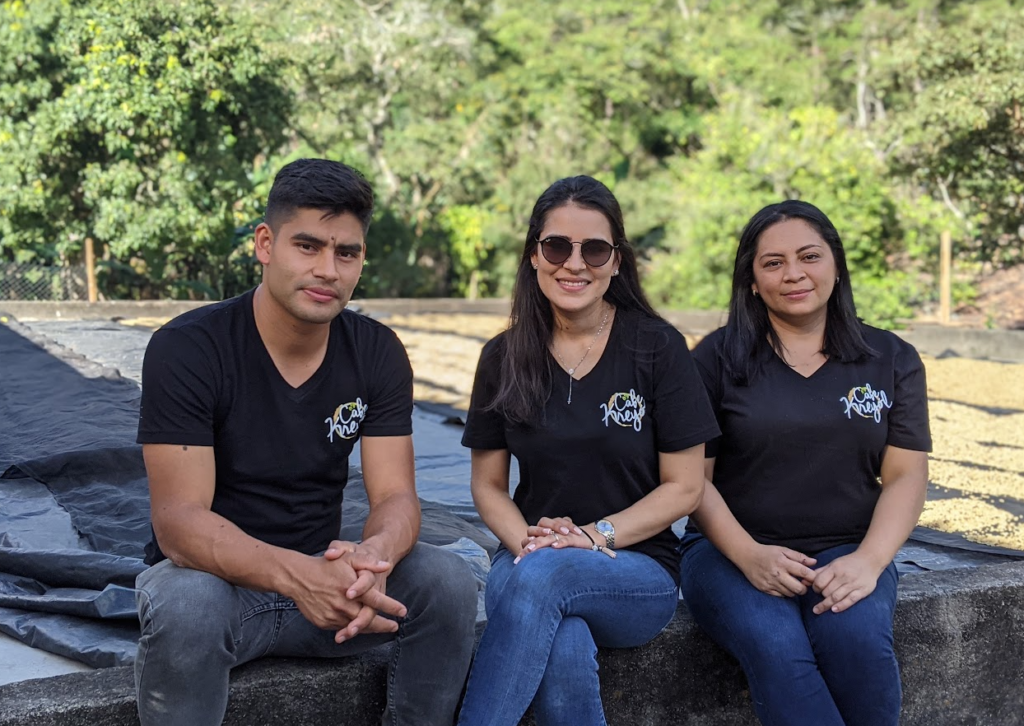
In 2009, when Marlen attended an international coffee conference to further her education, she met Jairo Restrepo, a Colombian expert in organic agriculture.
With his knowledge, the family’s experience, and the advice of Biodynamic expert Esteban Acosta, 18 Rabbit took their next step in the quest for sustainability.
In 2018, the farm became the first in Central America to obtain Biodynamic certification, from the prestigious Demeter brand.
Marlen explained that Biodynamic agriculture consists of returning more to the soil than what was taken from it. Which is why they make their own Biodynamic fertilizers, compost, and preparations to ensure the regeneration of the land. This practice also takes into account Cosmic cycles in agriculture.
Regarding the benefits of biodynamic agriculture, he highlighted that it allows us to protect the environment, ensure that farms are productive for longer, obtain better prices in the international market, and have better pest control.
He explains that proper soil nutrition prevents plantations from being affected by diseases such as leaf rust, which has hit coffee plantations hard.
The producer believes the implementing Biodynamic agriculture on coffee farms is crucial to ensuring the future of a sector, as she has witnessed how several farms in the area are losing productive capacity due to pesticides damaging the soil.
American, Joseph Stazzone, owner of Cafe Kreyol, and winner of the Roaster of the Year award, shares the same opinion.
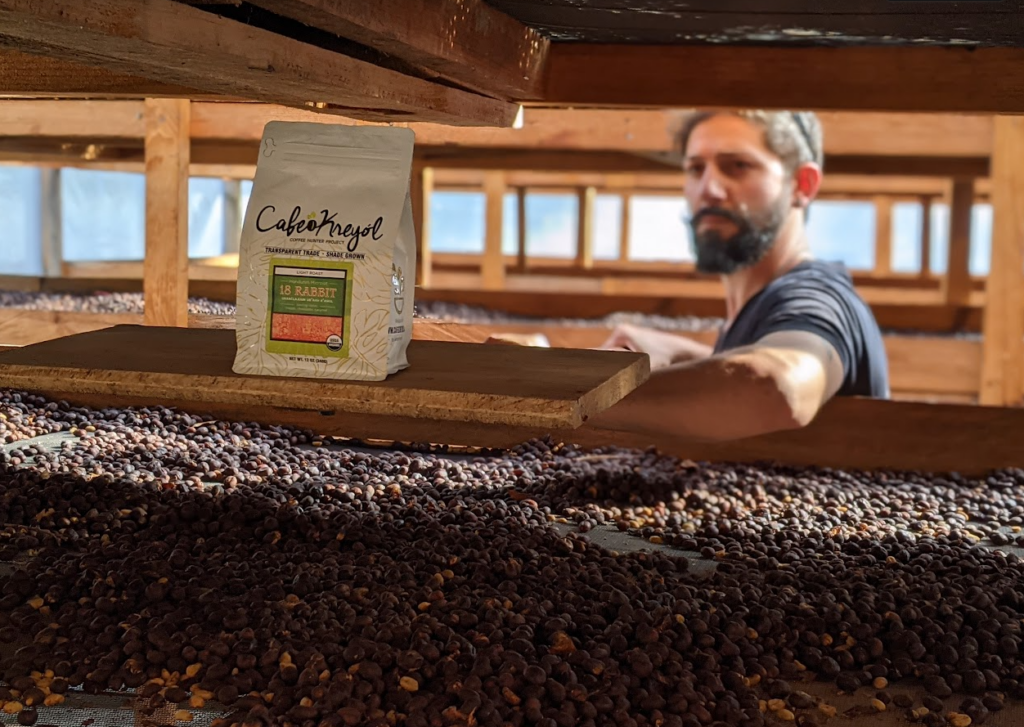
Stazzone, who has been a buyer at 18 Rabbit for 10 years, said that “consumers are now concerned about their health and know that products with chemicals are not good for them.”
He added that most buyers are looking to establish long-term business relationships, so they require producers to take care of the land so that it produces quality coffee for many years.
Today, 18 Rabbit has several farms, a cupping laboratory, and its own export company. It’s main markets are Germany and the United States, in addition to the coffee it sells in supermarkets and establishments in Honduras.
This has been translated from the Full Article, at La Prensa, from Spanish.