By Joseph Stazzone
Abstract
The practice of reposo—allowing green coffee to rest before export—has been used by coffee producers for generations. While many believe reposo contributes to improved stability and cup quality, limited published research has examined its effects under controlled conditions.
This study evaluated whether reposo measurably influences the physical stability and long-term quality of green coffee. Using matched coffee lots subjected to different post-harvest storage timelines, the research monitored changes in moisture content, water activity, bulk density, color stability, and sensory quality over several months.
The findings suggest that allowing green coffee to stabilize prior to export promotes greater cellular stability, slows physical aging, and significantly extends sensory shelf life. These results provide scientific support for a traditional practice that has long been valued by coffee producers.
Introduction
Green coffee remains a living seed long after harvest. Although properly dried coffee is considered stable, it continues to exchange moisture with its surrounding environment while gradually undergoing physical and chemical changes that ultimately affect roasting performance and cup quality.
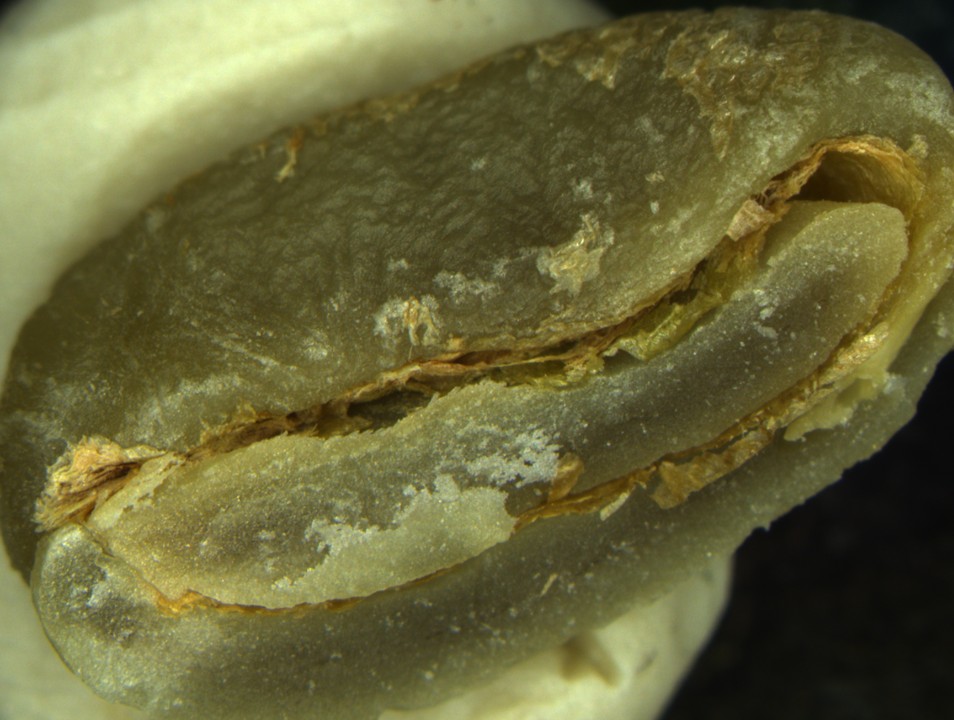
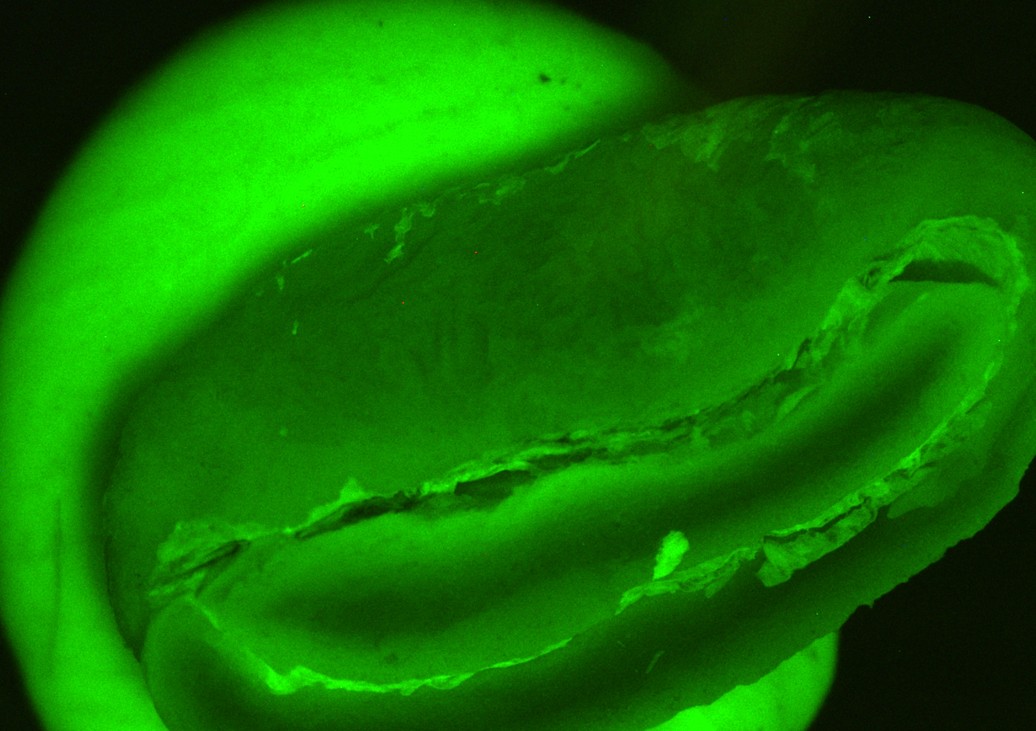
Across many producing countries, coffee is traditionally allowed to rest after drying and milling before export—a process commonly referred to as reposo. Producers have long believed this resting period allows moisture to equilibrate throughout the seed, resulting in improved stability during transportation and storage. Despite its widespread adoption, little published research has explored whether reposo produces measurable improvements in green coffee quality over time.
Cafe Kreyol initiated this research to better understand the science behind this long-standing practice and determine whether reposo measurably improves the shelf life and cellular stability of specialty coffee.
Research Objectives
This study sought to answer five primary questions:
- Does reposo improve the long-term sensory quality of green coffee?
- Does reposo promote more stable moisture content throughout storage?
- Does reposo stabilize water activity?
- Does reposo better preserve the cellular structure of green coffee during aging?
- Can reposo meaningfully extend the shelf life of specialty coffee?
Methodology
Two matched lots of coffee from the same producer were selected to minimize variables.
Both lots:
- Originated from the same farm
- Were harvested during the same harvest period
- Underwent identical processing
- Were dried using identical protocols
- Were milled to the same standards
The only intentional variable was post-processing storage.
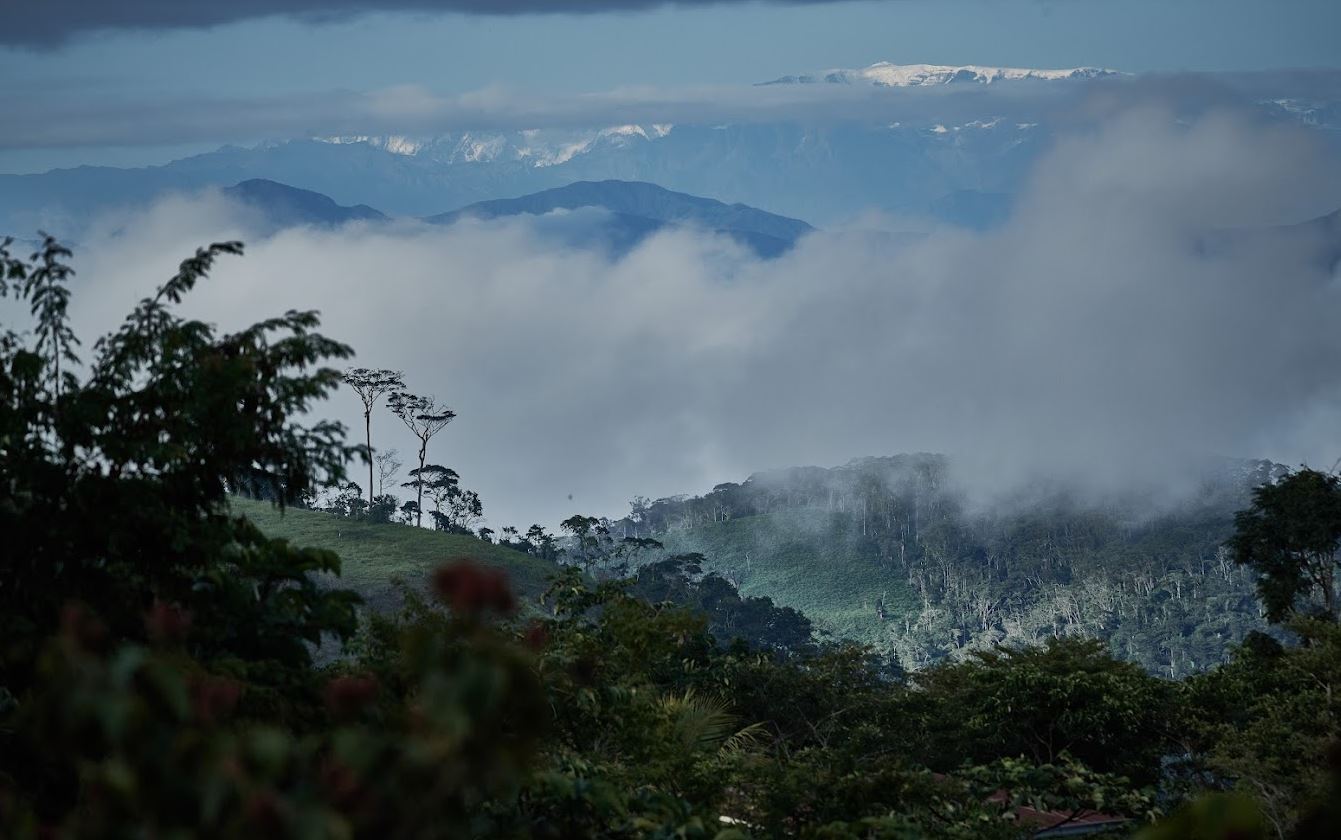
One lot underwent reposo, remaining at approximately 4,100 feet (1,250 meters) elevation for six weeks before export. The second lot was exported shortly after milling without an extended resting period.
Over the following months, both coffees were evaluated using consistent analytical and sensory protocols, including:
- Moisture content
- Water activity
- Bulk density
- Green coffee color measurements (L*)
- Monthly blind cupping evaluations
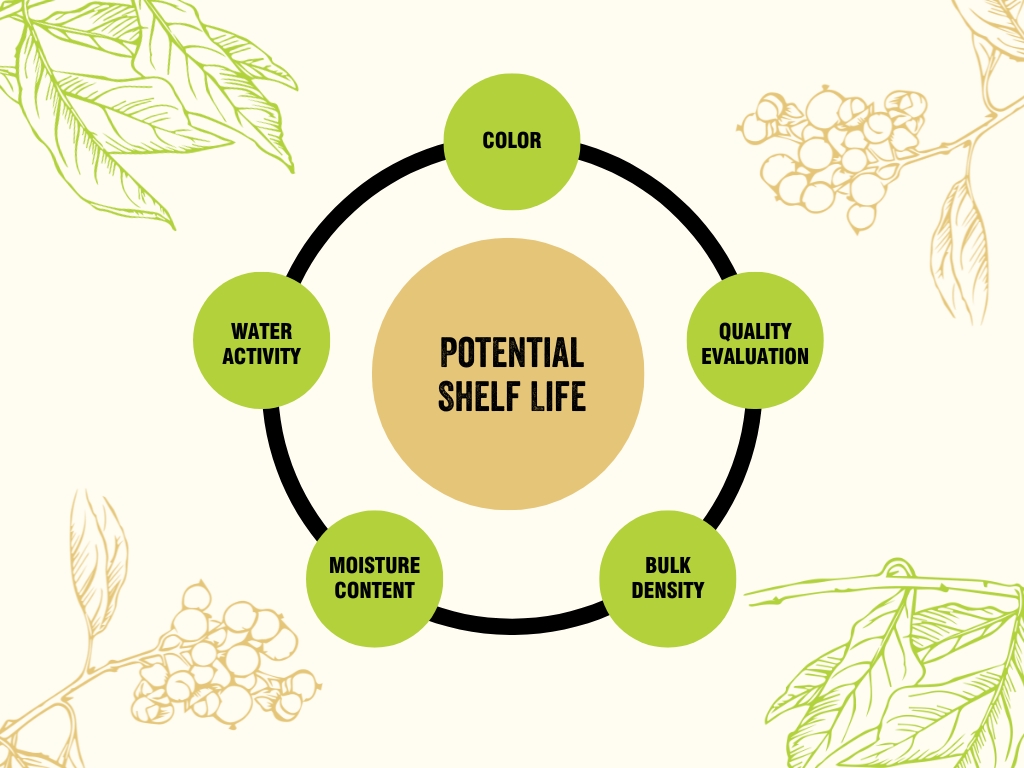
All coffees were roasted using standardized roasting profiles and evaluated under identical cupping conditions to minimize variability.
Results
Moisture Stability
The reposo coffee maintained a more stable moisture profile throughout the duration of the study.
Rather than experiencing rapid moisture movement following export, the rested coffee demonstrated slower, more consistent changes, suggesting improved internal equilibrium within the seed.
Water Activity
Measurements of water activity remained consistently more stable in the reposo lot.
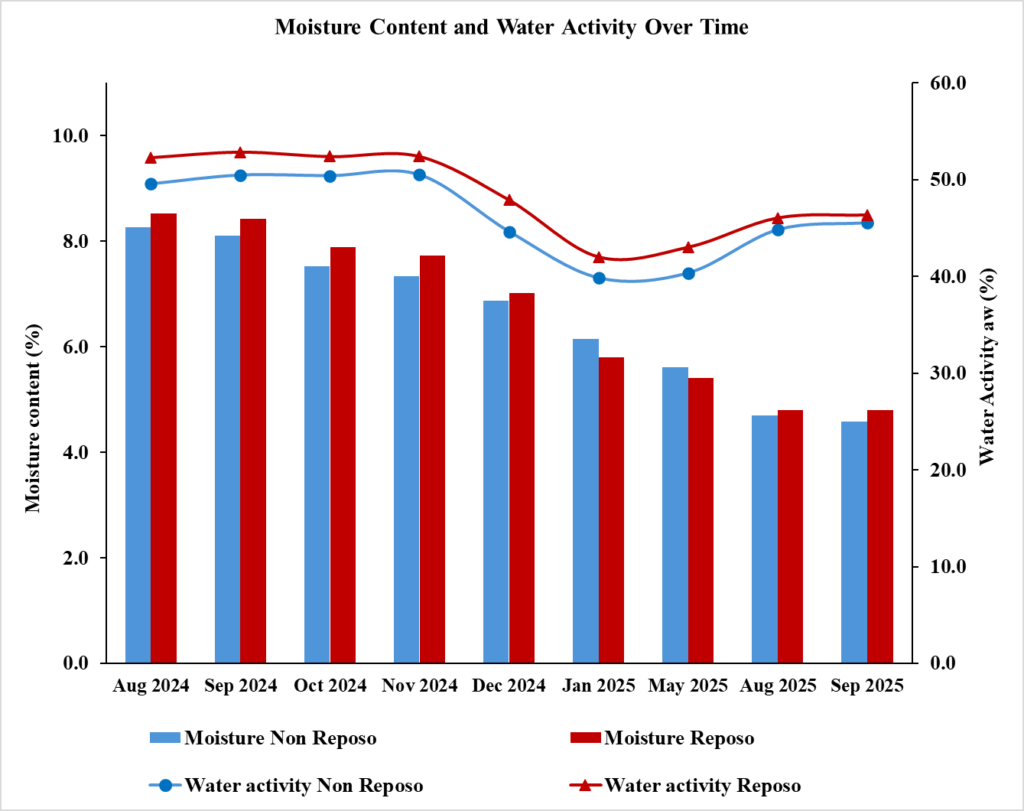
Because water activity directly influences chemical stability and the rate of coffee aging, these findings suggest reposo may help preserve green coffee quality over extended storage periods.
Density and Cellular Stability
Bulk density measurements remained more consistent in the reposo coffee throughout the study.
These observations indicate that the internal cellular structure of the coffee remained more physically stable during storage compared to coffee exported immediately after processing.
Color Stability
Colorimeter readings (L*) demonstrated slower physical aging in the reposo coffee.
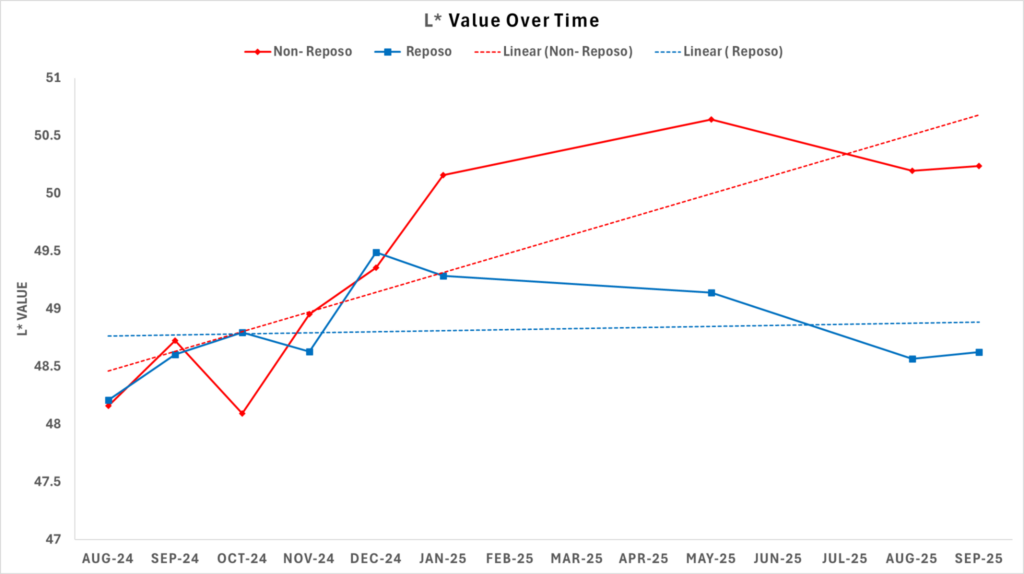
Although subtle, these differences remained consistent over time and aligned with other indicators suggesting improved cellular stability.
Sensory Performance
The most significant differences emerged during blind cupping.
During the early months, both coffees performed similarly.
As storage time increased, however, clear differences developed.
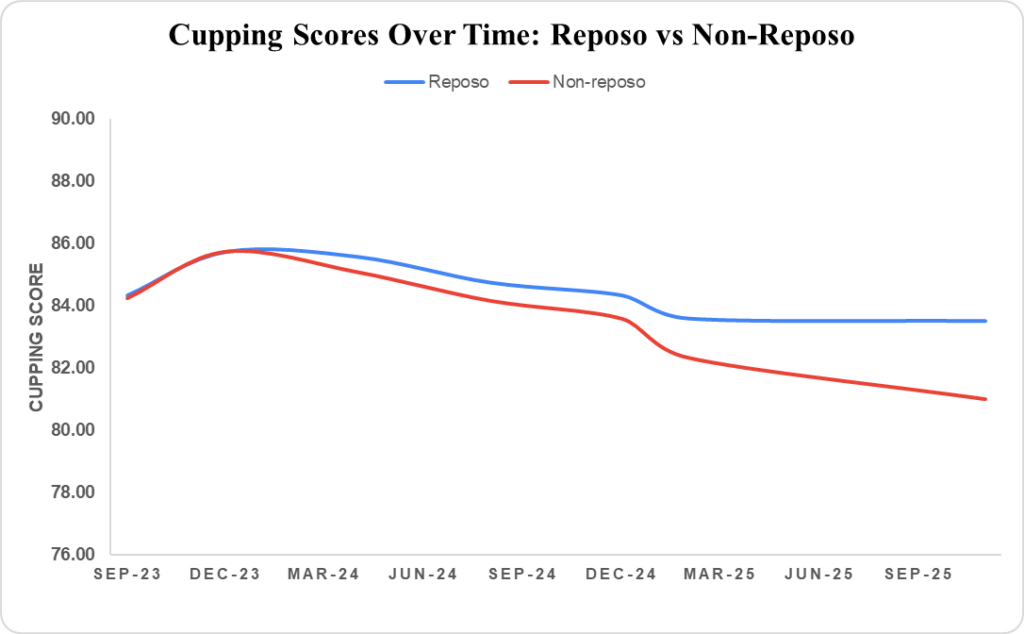
The reposo coffee maintained sweetness, acidity, clarity, and overall balance considerably longer than the control lot.
By the conclusion of the study, the reposo coffee continued scoring within specialty coffee standards, while the non-reposo lot had declined below specialty quality.
Discussion
Although reposo has traditionally been viewed as a practical post-harvest practice rather than a scientific intervention, the findings suggest measurable physical and sensory benefits.
The data indicate that allowing green coffee to gradually stabilize before export may improve:
- Moisture equilibrium
- Water activity stability
- Cellular integrity
- Long-term sensory preservation
- Shelf life
One possible explanation is that resting allows moisture gradients within the seed to naturally equalize before coffee experiences the stress of transportation and changing environmental conditions. While additional research is needed to fully understand the underlying mechanisms, the consistency observed across multiple measurements supports the hypothesis that reposo contributes to improved long-term stability.
Practical Implications
For Producers
Reposo may provide a simple, low-cost method for preserving quality after harvest while extending the marketability of premium coffees.
For Importers
Greater stability during ocean freight and warehouse storage may reduce quality degradation before roasting.
For Roasters
Improved shelf life allows for greater purchasing flexibility, more consistent roasting behavior, and longer inventory windows without sacrificing quality.
Limitations
This study represents a controlled comparison of matched coffee lots and should be viewed as an important step toward understanding reposo rather than a definitive conclusion.
Future research should examine:
- Additional coffee origins
- Multiple processing methods
- Different storage durations
- Additional elevations
- Various environmental conditions
Expanding this work across more origins and harvests will help determine how broadly these findings apply throughout the specialty coffee industry.
Conclusion
The results of this study support what many producers have observed through generations of experience: allowing green coffee to rest before export provides measurable benefits beyond tradition alone.
Reposo appears to improve moisture equilibrium, stabilize cellular structure, and preserve sensory quality over extended storage periods. These findings suggest that reposo represents one of the most practical post-harvest techniques currently available for extending the shelf life of specialty coffee while maintaining cup quality.
As Cafe Kreyol continues investing in research and education, we hope this work encourages additional collaboration across producing countries, universities, and the broader specialty coffee community.
About This Research Publication
By: Joseph Stazzone
Founder, Cafe Kreyol
Research Focus
Green coffee physiology, post-harvest handling, cellular stability, and specialty coffee shelf-life preservation.
Industry Publication
This research was featured in Roast Magazine, Issue 135 (May/June 2026), in the article “Reposo’s Impact: Shelf Life and Cellular Stability of Green Coffee.”
Acknowledgments
This project reflects the collaborative nature of specialty coffee research and would not have been possible without the knowledge, encouragement, and technical expertise of numerous individuals and organizations.
Cafe Kreyol extends its sincere appreciation to collaborators and contributors from:
Their expertise in agricultural science, post-harvest research, ecological systems, and scientific methodology helped strengthen both the design and interpretation of this work. By bringing together perspectives from academia, conservation, and the specialty coffee industry, this project demonstrates the value of collaborative research in advancing coffee quality and sustainability.